
Resurrecting My Yaesu FT-8900: A Long-Overdue PA Repair
Some years back, my trusty Yaesu FT-8900 suddenly developed a frustrating problem—it had stopped transmitting entirely.
The receiver was fine, the front panel behaved normally, but the power meter stubbornly sat at zero no matter which band I tried. Like many of us do when gear misbehaves, I opened the lid and began the now-familiar ritual of fault-finding.
It didn’t take long to narrow the issue down to the power amplifier stage, specifically the RD70HVF1 MOSFET. These devices are well-known beasts in high-power VHF/UHF rigs, and unfortunately, they’re also a known failure point. I ordered a replacement part at the time…and then life happened. The radio got shelved, the part ended up in a drawer, and “I’ll get around to it” became several years.
Picking the Project Back
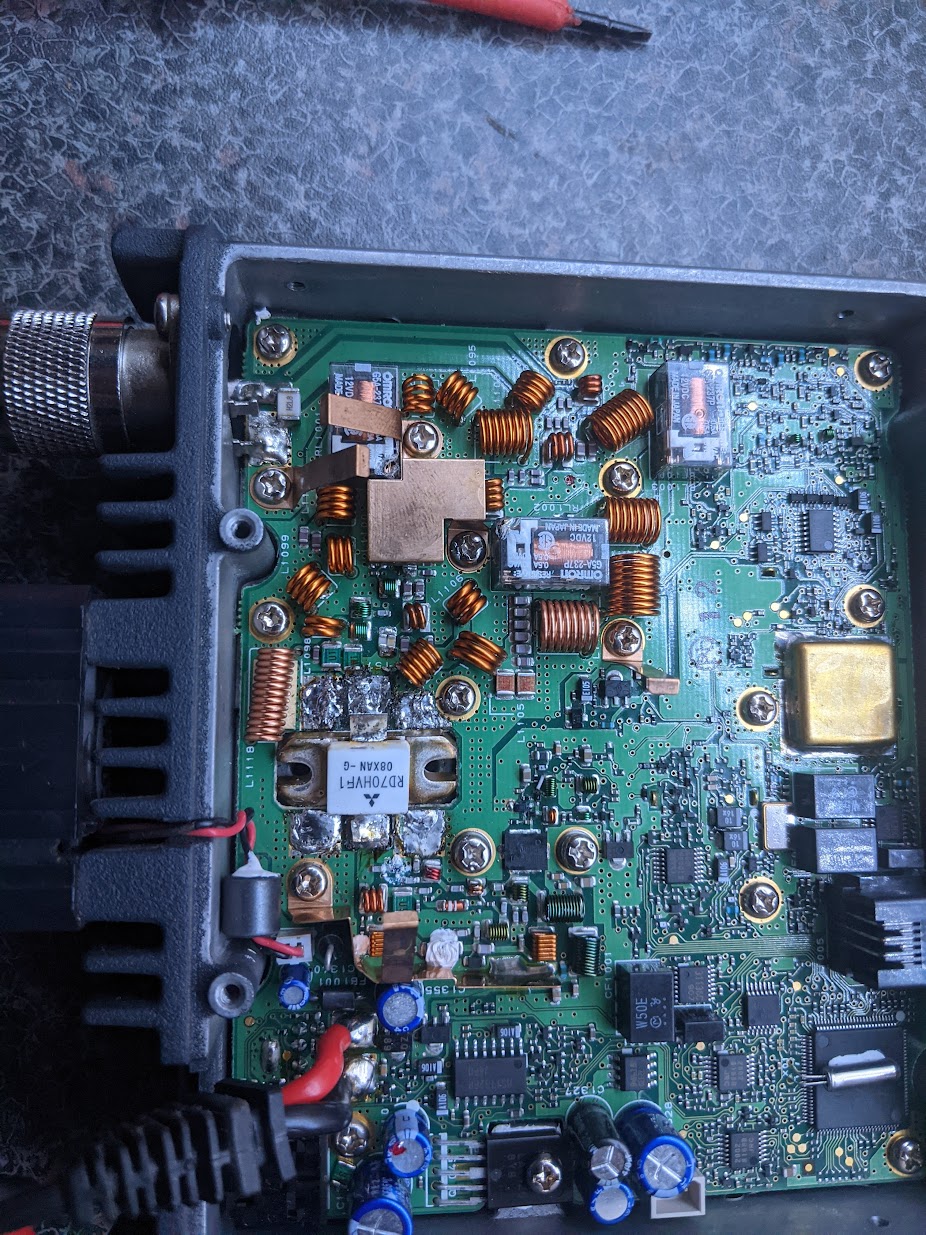
Fast forward to recently when I finally decided it was time to bring the FT-8900 back to life. Before diving in, I refreshed my memory by revisiting the diagnostic process. One resource stood out immediately:
👉 Alan, W2AEW’s excellent video on PA fault finding: #116: Repair Log, Part 1: Yaesu FT-7800 Dual Band FM Transceiver, no VHF output
Alan’s clear explanations and practical demonstrations were invaluable. His walkthrough of the PA stage and common issues helped confirm that I’d been on the right track originally—and gave me the confidence to pick up the repair after such a long gap.
The Fun Part: Removing the MOSFET
Getting the old RD70HVF1 out of the board turned out to be the toughest part of the entire job. The MOSFET is solidly soldered to the PCB and thermally bonded to the heat sink, so removing it requires patience, heat control, and some determination. A good hot-air station, plenty of flux, and slow, even heat were key.
Eventually, it let go—always a satisfying moment! Once the pads were cleaned up, installing the new device was straightforward. A fresh application of thermal compound, careful alignment, and a steady hand brought the FT-8900 back together nicely.
Back on the Air
With everything reassembled, I powered up the radio and held my breath. A quick test into a dummy load showed good output power across all bands. After years of sitting unused, the FT-8900 was finally back on the air—something that felt surprisingly rewarding.
If you’re facing a similar issue with your own Yaesu rig, I highly recommend watching Alan’s video and taking your time with the PA section. These rigs are repairable with patience and the right tools, and there’s nothing quite like reviving a radio you’ve owned for years.