
Exploring 4 Metres – A New Local Opportunity
Recently, I noticed that my local repeater group has added a 4 metre (70 MHz) parrot repeater.
This immediately caught my attention, as 4m is a band I have always been interested in experimenting with, but have never fully managed to exploit from my current QTH.
Challenges of 4 m at My QTH
In all honesty, I have not had much success on 4 m so far. The main limiting factor is my location. Putting up an effective antenna for 70 MHz is not straightforward at my QTH, particularly when compared with the relative ease of VHF/UHF or even some HF installations. Antenna size, siting, and compromises all become much more noticeable on this band.
That said, the addition of a parrot repeater locally provides a very useful tool. Being able to hear my own signal repeated back allows me to experiment with equipment and antennas, and to understand what is — and is not — working from home.
Current 4 m Equipment
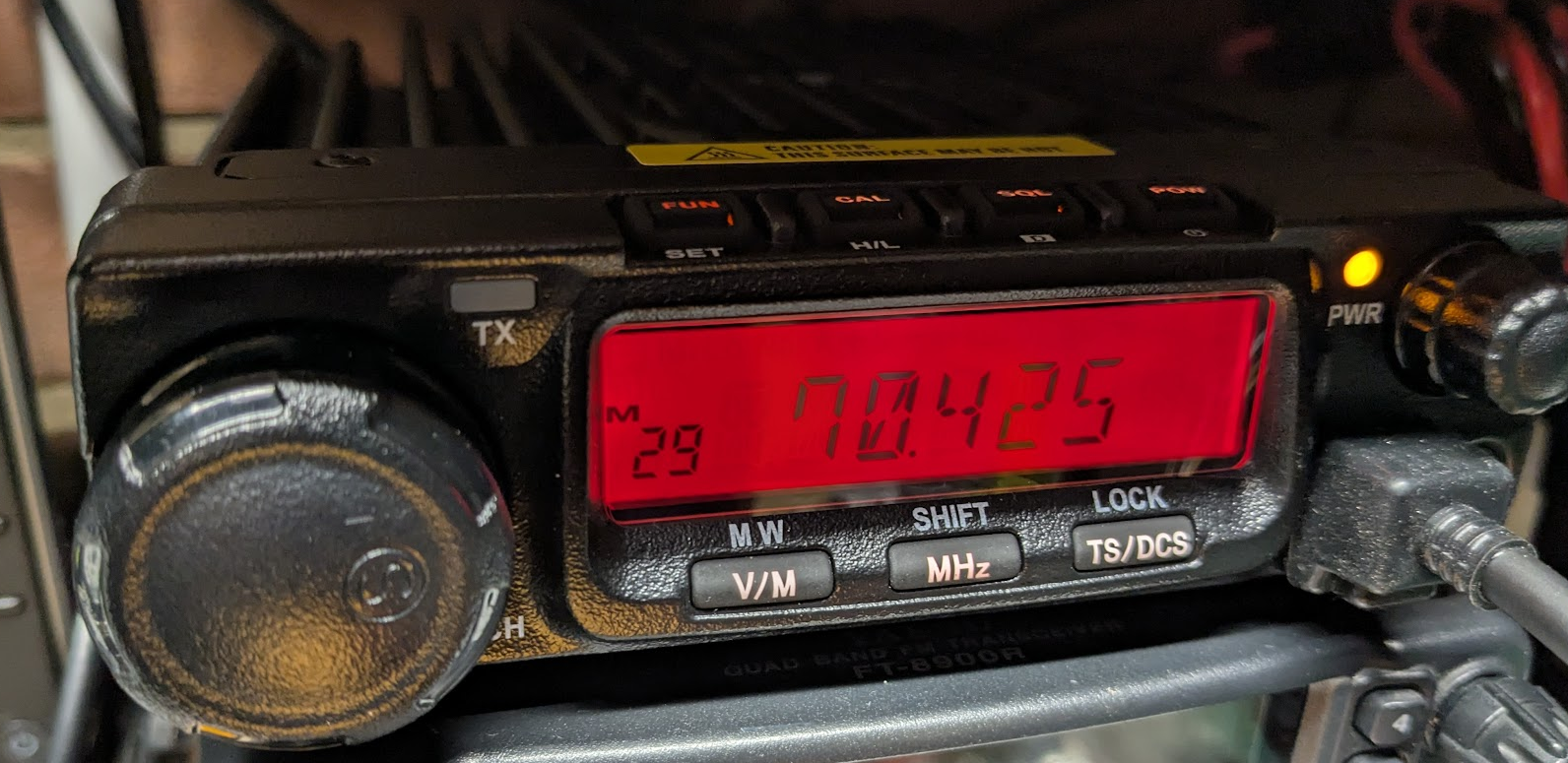
I started to build collection of 4 m-capable equipment:
Anytone AT-588 mobile transceiver Paired with several antenna options:
MyDEL 4 m 70 MHz mobile whip
Moonraker SQBM412 70 MHz base vertical
A simple dipole
A home-brew flowerpot antenna cut for 4 m
Anytone AT-288 handheld transceiver Covering 66–88 MHz, which makes it ideal for casual monitoring and short-range testing on the band.
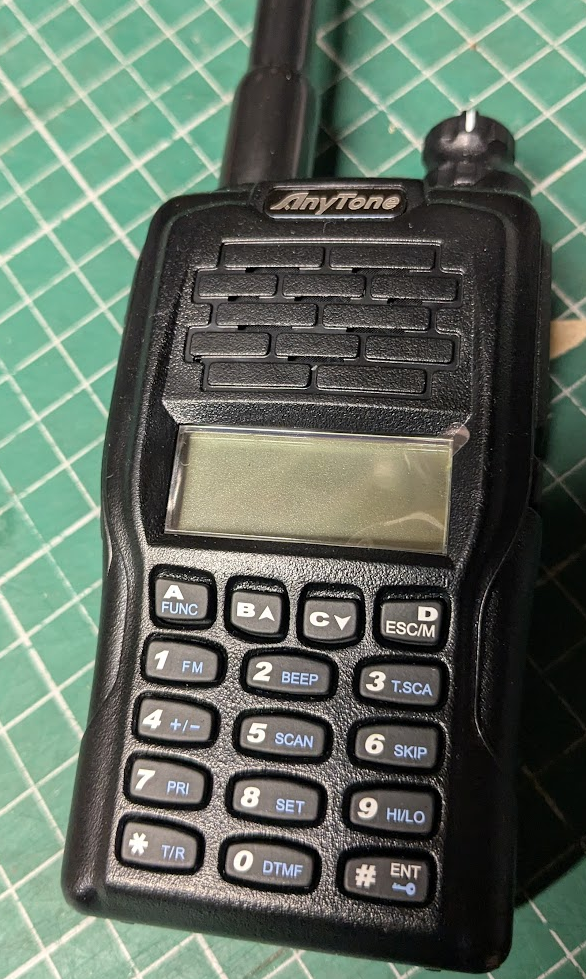
Each antenna has its own compromises, and part of the enjoyment of 4 m is experimenting to see what performs best under real-world conditions rather than on paper.
Looking Ahead – Portable and Mobile Operation
I suspect that 4 m will really come into its own for me away from home. As we move into the summer months, I plan to spend some time operating from better locations — either mobile from the car or portable with a simple mast and antenna setup.
Higher ground, clearer take-off, and fewer local obstructions should make a noticeable difference, and the parrot repeater will again be invaluable for quick signal checks and antenna comparisons.
Final Thoughts
The 4 m band often sits quietly between HF and 2 m, but it has its own unique propagation characteristics and plenty of potential. With local infrastructure improving and a bit more experimentation planned, I am looking forward to giving 70 MHz the attention it deserves.
As always, half the fun is in the experimenting — and 4 m certainly provides plenty of scope for that.